
Do Opossums Carry Rabies?
Washington’s wildlife agency describes rabies in opossums as uncommon and the reason as unknown. This supports rarity, not a proven protective body-temperature mechanism. See Washington Department of Fish and Wildlife: opossum health and behavior.
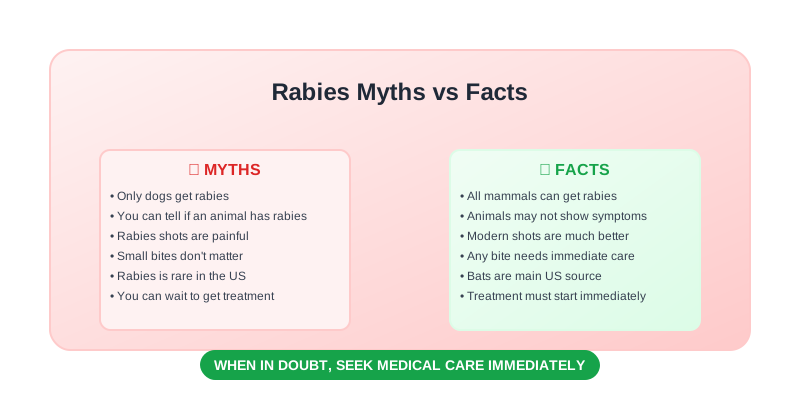
However, rare does not mean impossible, and exposure decisions should never be made based on assumptions about species. Any bite, scratch, or saliva contact from a wild opossum should be treated as a potential exposure and assessed by a medical professional promptly.
Why Confusion About Opossum Rabies Is Common
Several factors contribute to public confusion about opossum rabies risk:
- Playing possum — opossums sometimes feign death when frightened. This involuntary defensive behavior can be mistaken for neurological symptoms of rabies, causing unnecessary alarm in people who witness it.
- General wildlife caution messaging — public health guidance typically advises caution with all wildlife, which can blur distinctions between higher-risk and lower-prevalence species.
- Regional variation in guidance — some state and local health departments have specific opossum guidance; others treat all wildlife exposures under the same protocol.
What to Do After Opossum Contact
Regardless of the animal involved, the response to a bite or scratch from any wild animal follows the same essential steps:
- Wash the wound immediately — gently wash and flush with soap and running water for about 15 minutes when possible. This is one of the most important early actions and should not be skipped under any circumstances.
- Record the details — note the time, exact location, what happened, and the animal's behavior before and during contact.
- Contact your healthcare provider or urgent care — describe the exposure clearly so they can assess whether post-exposure prophylaxis (PEP) is needed.
- Notify local animal control or public health — they may be able to locate and test the animal, which can directly affect your treatment decision.
Can You Wait and Watch for Symptoms?
No. Waiting for rabies symptoms before seeking treatment is not a medically safe strategy. Rabies is almost always fatal once symptoms appear. If post-exposure prophylaxis is indicated, it should be given before symptoms begin. Seek prompt professional guidance after a possible exposure, even if time has passed or you feel well.
How to Reduce Opossum Encounters at Home
Most opossum encounters are avoidable with basic precautions:
- Secure garbage bins with locking lids so food waste does not attract wildlife.
- Do not leave pet food or water outside overnight.
- Seal openings under porches, decks, and sheds that opossums could use as shelter.
- Keep pets vaccinated and supervise them when outdoors, particularly during evening and nighttime hours.
- Do not attempt to handle or relocate opossums yourself — contact local animal control for assistance.
When to Involve Animal Control or Public Health
Contact animal control or your local health department immediately if an opossum has bitten or scratched a person or pet, if the animal is behaving unusually (active during daylight, disoriented, or unresponsive), or if you cannot locate the animal for testing. Do not attempt to capture or contain the animal without professional guidance.
How Opossums Compare to Other US Wildlife
Species patterns help public-health assessment, but cannot establish whether an individual animal was infected. See CDC: factors in rabies exposure assessment.
For context across the higher-concern and lower-concern wildlife groups, see the full comparison set:
- Raccoons
- Skunks
- Foxes
- Coyotes (spillover host)
- Rats and mice (almost never)
- Squirrels (almost never)
- Birds (cannot get rabies — not mammals)
Follow-up After an Opossum Bite
The risk is low, not zero. If an opossum bit you or your pet, the standard wound-care steps still apply: wash and flush thoroughly with soap and running water for about 15 minutes when possible, monitor for bacterial infection, and check tetanus status. Seek prompt medical or public-health assessment after a bite that breaks skin; do not decide from species rarity alone.
For step-by-step exposure response, see what to do after a bite.
Pets and Opossum Encounters
If a pet has contact with wildlife, contact a veterinarian. Management depends on the exposure, vaccination history and local requirements. See CDC veterinary guidance: management after animal exposure.
Related Guides on SafeRabies
Why Opossums Sometimes Look Sick When They Are Not
Opossums can appear motionless as a defensive response. Behavior alone cannot diagnose or exclude rabies; avoid handling wildlife and report the contact to local professionals. See Washington wildlife agency: opossum defensive behavior.
Part of our animal rabies guide: see the full overview of which animals carry rabies — including which are higher-concern and which almost never spread it.
Sources support the specified claims; citing an organization does not imply its endorsement. This sourcing update is not a completed medical review.
Details to Bring to an Assessment
Write down where the encounter happened, whether there was a bite or scratch, and whether saliva could have reached broken skin or the eyes, nose or mouth. Describe the wound and any first aid already given. These details help the professional assess the contact; they are not a checklist for ruling out exposure yourself. See CDC: clinical exposure assessment.
For the wound-washing advice above, see WHO: washing exposed wounds for at least 15 minutes and seeking prompt care. Washing does not replace professional exposure assessment.