
Start Here
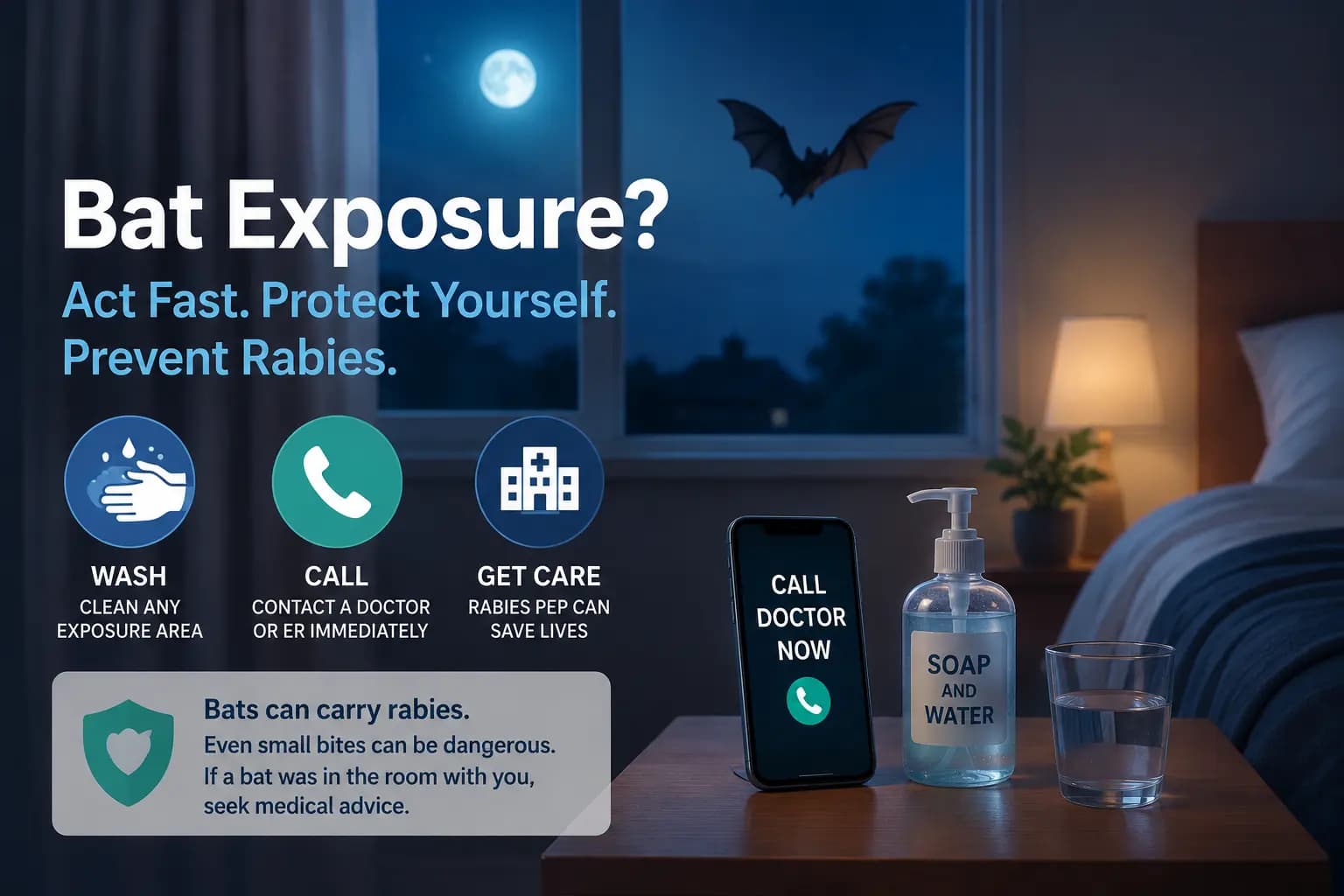
Bat Exposure: What to Do, Even Without a Visible Bite
Learn wound-washing steps and the details professionals assess after possible bat contact, including when no bite is visible.
Read Now →Fast answers for bites, vaccines, clinics, and symptoms. Use the quick links below to find what you need.
What are you looking for?
Learn wound-washing steps and the details professionals assess after possible bat contact, including when no bite is visible.
Read Now →
Learn what to ask emergency departments, urgent-care centers, and public-health authorities before traveling after a possible exposure.
Read Now →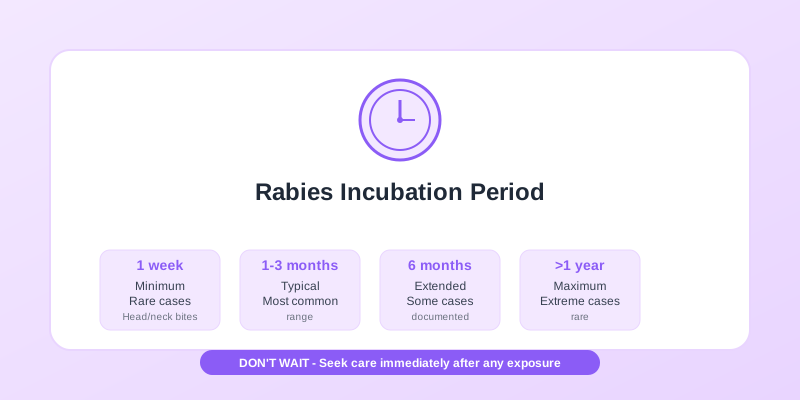
Learn about early rabies symptoms, variable timing, and why symptoms are not a safe way to assess a possible exposure.
Read Now →Learn wound-washing steps and the details professionals assess after possible bat contact, including when no bite is visible.
Read Now →Learn what to ask emergency departments, urgent-care centers, and public-health authorities before traveling after a possible exposure.
Read Now →Learn about early rabies symptoms, variable timing, and why symptoms are not a safe way to assess a possible exposure.
Read Now →Learn wound-washing steps and the details professionals assess after possible bat contact, including when no bite is visible.
Read GuideLearn which dog-bite details healthcare and public-health professionals consider, plus immediate wound-care steps after an exposure.
Read GuideLearn the early and severe rabies symptoms that can appear after a bite, when to seek emergency care, and why urgent action matters before symptoms begin.
Read GuideLearn what to ask emergency departments, urgent-care centers, and public-health authorities before traveling after a possible exposure.
Read GuideLearn how the 10-day dog observation rule works after a bite, when it applies, what it means for rabies risk, and when you still need urgent medical or public-health guidance.
Read GuideLearn how to find healthcare and public-health resources to contact about rabies PEP, what to ask before traveling, and why prompt professional assessment matters.
Read GuideLearn what to do if you cannot find rabies PEP care nearby, including wound care, who to call, where to go, and how to avoid dangerous delays.
Read GuideDo all hospitals carry rabies vaccine and HRIG? Learn why availability varies, what to ask before you go, and what to do quickly after possible rabies exposure.
Read GuideLearn how rabies PEP works for unvaccinated people, including wound washing, HRIG, vaccine schedule, missed doses, side effects, and where to get treatment fast.
Read GuideLearn what HRIG/RIG is, when clinicians may include it in PEP, how it works with rabies vaccine, and what to ask if it is not available onsite.
Read GuideComplete guide to rabies vaccine schedule for humans with dose timing, immunoglobulin use, and what to expect after exposure.
Read GuideLearn how rabies PEP works for previously vaccinated people, including the 2-dose schedule, why HRIG is not usually given, wound care, and what to do after possible exposure.
Read GuideMissed a rabies vaccine dose? Learn what to do next, when to contact your provider, why timing matters, and how to stay on track with rabies PEP after a possible exposure.
Read GuideLearn common and rare rabies vaccine side effects, what is usually normal, when urgent care is needed, and why treatment should not be delayed after real exposure.
Read GuideLearn about early rabies symptoms, variable timing, and why symptoms are not a safe way to assess a possible exposure.
Read GuideLearn how long rabies takes to show symptoms, incubation timeline, risk factors, and why early action is critical in this practical guide.
Read GuideLearn what happens if rabies is left untreated, including symptom timeline, disease progression, and why early action is critical.
Read GuideLearn the early and severe rabies symptoms that can appear after a bite, when to seek emergency care, and why urgent action matters before symptoms begin.
Read GuideBitten by a vaccinated dog? Learn real rabies risk, what to do immediately, and when vaccination is needed with a simple, practical CDC-aligned guide.
Read GuideOpossums can get rabies, although wildlife authorities describe cases as uncommon. A bite or scratch still needs prompt professional assessment.
Read GuideLearn the rabies vaccine schedule for dogs, cost, safety, and legal requirements to protect your pet and family.
Read GuideComplete guide to rabies injection for cats, including first-shot timing, boosters, costs, side effects, and legal requirements.
Read GuideThe articles above are practical guides written for one specific situation: a parent, traveller, pet owner, or clinician needs an answer about rabies and needs it now. Each post is structured to answer the question in the first 60 seconds and then expand into the supporting detail — symptoms by animal, schedule by exposure type, cost by US state, and what changes if you have already had pre-exposure vaccination.
Every article on this blog is written against the same three reference sets: the US Centers for Disease Control and Prevention (CDC) rabies pages and ACIP recommendations, the World Health Organization (WHO) rabies fact sheets and technical reports, and — for pet vaccination — the American Animal Hospital Association (AAHA) and American Association of Feline Practitioners (AAFP) vaccination guidelines. State-specific posts also cite the relevant state health department or animal control statute.
Topics come from real reader questions: search queries we see in Google Search Console, questions sent through the contact form, and points where CDC or WHO guidance is commonly misread. We prioritise topics where wrong information can delay professional assessment or create unnecessary expense. We emphasize case-specific healthcare and public-health guidance rather than choosing a treatment or care setting for the reader. Decorative content gets cut.
Do not read the blog. Open the post-exposure prophylaxis guide, run the exposure checklist, or find healthcare and public-health contacts with the emergency guide. If you have concern about a recent bite, scratch, or bat exposure, seek prompt medical or public-health guidance. Use emergency services for severe wounds or another immediate threat to life.
Our sourcing and corrections policy is described in our editorial standards). Refer to each article for its specific sources and review status. We publish corrections inline on the post itself with a visible “Updated on” date; the full corrections workflow is on that same page.
SafeRabies is an independent educational site. References do not imply endorsement. See each article for its sources and review status. This site does not replace emergency medical care — if you have been bitten or scratched, seek treatment immediately. See our disclaimer.
If you or someone you know has been bitten, scratched, or exposed, take the next step now.