
Rabies awareness & prevention
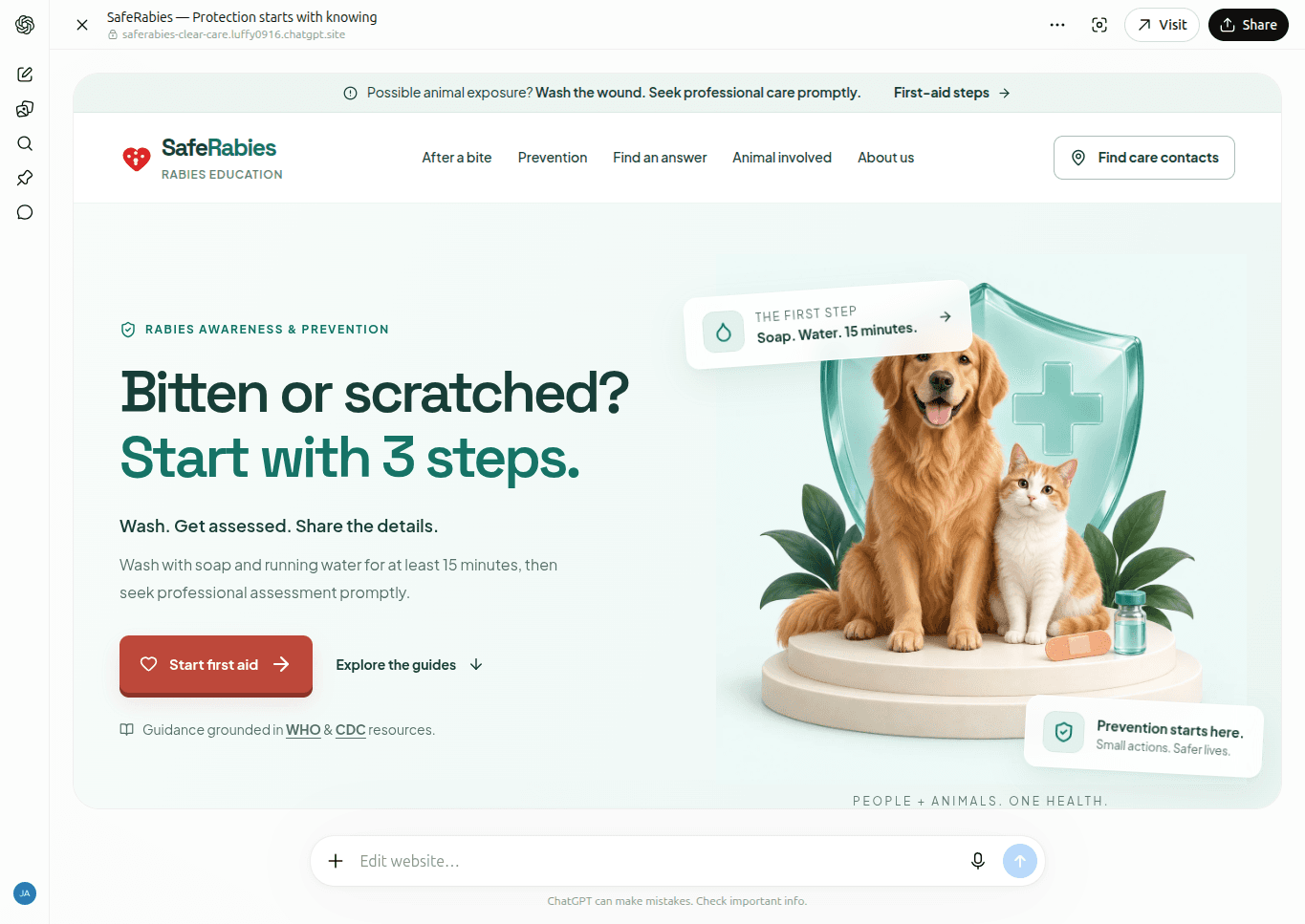
Bitten or scratched?
Start with 3 steps.
Wash. Get assessed. Share the details.
Wash with soap and running water for at least 15 minutes, then seek professional assessment promptly.
A clear place to begin
Find the guidance you need.
After a bite or scratch
Start with wound washing and practical next steps.
Start first aidGet emergency guidance
Read emergency steps. Confirm services and availability before traveling.
Emergency stepsUnderstand vaccination
Learn about vaccination before and after a possible exposure.
Explore vaccinesMake prevention a habit
Explore animal safety, pet care, and travel guidance.
Prevention adviceFind a facility to contact
Search source-backed U.S. facility contacts and official public-health resources.
Open Clinic FinderWhat each step
looks like.
Use this overview while arranging an assessment with a healthcare professional or public-health authority.
Wash immediately
Gently wash and flush the wound with soap and running water for at least 15 minutes. This is an important first-aid step; then contact a health professional.
Request an exposure assessment
Contact a healthcare professional or public-health authority promptly. They can evaluate whether post-exposure prophylaxis (PEP) is indicated for your situation.
Report the animal
If the animal can be safely identified, contact local animal-control or public-health authorities. Dogs, cats, and ferrets may sometimes be observed under public-health guidance. Do not start, stop, or change PEP based on this website alone.
Read emergency steps
Follow immediate first-aid steps, then contact a healthcare professional or local public-health authority for guidance on where to seek care.
Identify the animal involved
The animal involved is one detail a clinician or public-health professional uses when evaluating an exposure.
Replace common assumptions
with reliable guidance.
“If the animal seems fine, you're safe”
A dog, cat or ferret can shed rabies virus for several days before it looks sick — a healthy-looking animal doesn't rule out exposure.
“Rabies only comes from wild animals”
Dogs are responsible for up to 99% of human rabies cases worldwide. Unvaccinated pets, not just wildlife, are a real risk.
“I'll know if I was bitten by a bat”
Bat bites and scratches can be difficult to notice. If direct contact may have occurred, discuss the circumstances with a healthcare professional or public-health authority.
Focused tools for
each next step.
Emergency Guide
Read immediate steps after an animal bite or scratch and prepare the details a professional will ask about.
Read emergency steps →Exposure Checklist
Organize the animal, contact, timing, location, and wound details into a checklist summary for professional assessment.
Prepare my summary →Pet Vaccination Reminder
Save one pet reminder in this browser using the due date supplied by your veterinarian. Optional calendar export; no automatic notifications or human PEP schedules.
Start tracking →Symptoms Reference
Read educational information about symptoms in people and animals. Symptoms cannot confirm or rule out whether an exposure occurred.
Read the reference →Travel Risk Guide
Review destination guidance, questions to discuss before travel, and links to official sources before you fly.
Plan travel →What brings you here?
We have the right guide for you.
Select your situation and get the most relevant resources instantly.
Pet Owner Guide
What to do if your dog, cat or pet is bitten by a wild animal. Vet visit checklist, quarantine rules, and local reporting steps.
Read pet guide →Pet Pet Vaccination Reminder
Save one pet reminder in this browser using the due date supplied by your veterinarian. Optional calendar export; no automatic notifications or human PEP schedules.
Track pet vaccines →Find Emergency steps
Ask a healthcare professional or local public-health authority where to seek assessment. Confirm services and hours directly before traveling.
Search contacts →Parent Safety Hub
Explore bite prevention for children and what to discuss with a healthcare professional after a possible exposure.
Parent guide →Kids Learning Zone
Age-appropriate content teaching children why to stay away from stray animals and what to tell an adult immediately.
Kids section →Printable Family Guides
Downloadable bite-response checklists and school permission sheets. Print and share with your kids' school.
Download free →Pre-Travel Risk Guide
Review travel guidance and discuss whether pre-exposure vaccination (PrEP) is recommended with a healthcare professional before you fly.
Plan safe travel →US Rabies Risk Map
CDC wildlife reservoir map, regional explanations and source limitations.
View US map →Pre-Exposure Vaccines
Pre-exposure vaccination (PrEP) schedules for travellers, timing before departure, and what to do if bitten abroad where PEP isn't available.
Vaccine schedule →Student Resource Hub
Peer-reviewed sources, infographics, and cited statistics for school projects, dissertations, and essays.
Student resources →Classroom Kits
Ready-to-use lesson plans, printable worksheets, and interactive activities for teachers covering rabies awareness.
School materials →Exposure Checklist
Organize exposure details for professional or public-health assessment. A professional decides whether PEP is indicated.
Open the checklist →Outdoor Safety Guide
How to avoid wildlife contact, what to carry in your pack, and the full response protocol for bat or wild animal encounters off-grid.
Outdoor guide →Exposure Checklist
Organize six details about an animal encounter into a checklist summary for a clinician or health department.
Prepare a summary →Emergency Guidance After a Bite
Read emergency guidance, then call before traveling because vaccine, HRIG/RIG, hours, and services can change.
Read emergency steps →What SafeRabies helps you do
Follow a focused wound-washing guide
Organize useful exposure details
Seek professional and public-health advice
Let a qualified professional determine whether PEP is indicated
Understand rabies
in regional context.
Explore CDC’s map of US wildlife rabies reservoirs and regional explanations. Source dates and limits are explicit; this map cannot assess a person’s exposure.
Read. Learn.
Stay protected.
What to do in the first 60 minutes after a dog bite
The actions you take immediately after exposure dramatically change your outcome. A step-by-step guide covering wound care, when to go to the ER, and what to tell your doctor.
Read article →Woke up to a bat in your room? Here's exactly what to do
Bat contact is the leading cause of rabies deaths in the US. Bats can bite without waking you — which is why bat exposure protocols are stricter than for other animals.
Read article →ER vs Urgent Care for rabies exposure — which is right?
Rabies vaccine and HRIG availability can change. Learn what to ask a facility before traveling and how public health may help coordinate care.
Read article →Common questions,
answered instantly.
What should I do immediately after an animal bite?
Wash and flush the wound with soap and running water for at least 15 minutes. Then contact a healthcare professional or public-health authority promptly for an exposure assessment. They can decide whether post-exposure prophylaxis (PEP) is indicated.
What are the first signs of rabies in humans?
Early symptoms can include fever, headache, weakness, or unusual sensations near the exposure site. Later neurological symptoms can occur. Symptoms are not a safe way to decide whether an exposure needs care; arrange an assessment after a possible exposure.
How soon should I seek a rabies PEP assessment after a bite?
Contact a healthcare professional or public-health authority promptly after a possible exposure. Whether PEP is indicated—and the appropriate schedule—depends on the exposure, local guidance, and your vaccination and health history.
Can I get rabies from a scratch or minor wound?
A scratch that breaks the skin may require assessment if saliva or nervous tissue from a potentially rabid animal could have entered it. Wash the area and discuss the animal, contact, and location with a healthcare professional or public-health authority.
Is rabies dangerous for children?
Children may not report an animal encounter or may describe it incompletely. Ask calmly what happened, wash any wound, and contact a healthcare professional or public-health authority promptly for guidance.
How do I read emergency steps about rabies vaccine and HRIG?
Contact your local public-health authority for guidance on where to seek assessment. Use the SafeRabies emergency guide for immediate steps after a possible exposure. Use the Clinic Finder to search published U.S. facility contacts. Rabies vaccine and immunoglobulin (HRIG) availability changes, so call the facility before you travel.
How much does a rabies shot cost?
Costs vary by country, facility, treatment, and insurance. See our guide to rabies-vaccine costs, and ask the facility, insurer, or public-health authority about current charges and assistance before making financial decisions.
Need to act now?
Begin with first aid.
Follow the wound-washing guide, then arrange a professional exposure assessment.
Open the first-aid guide