
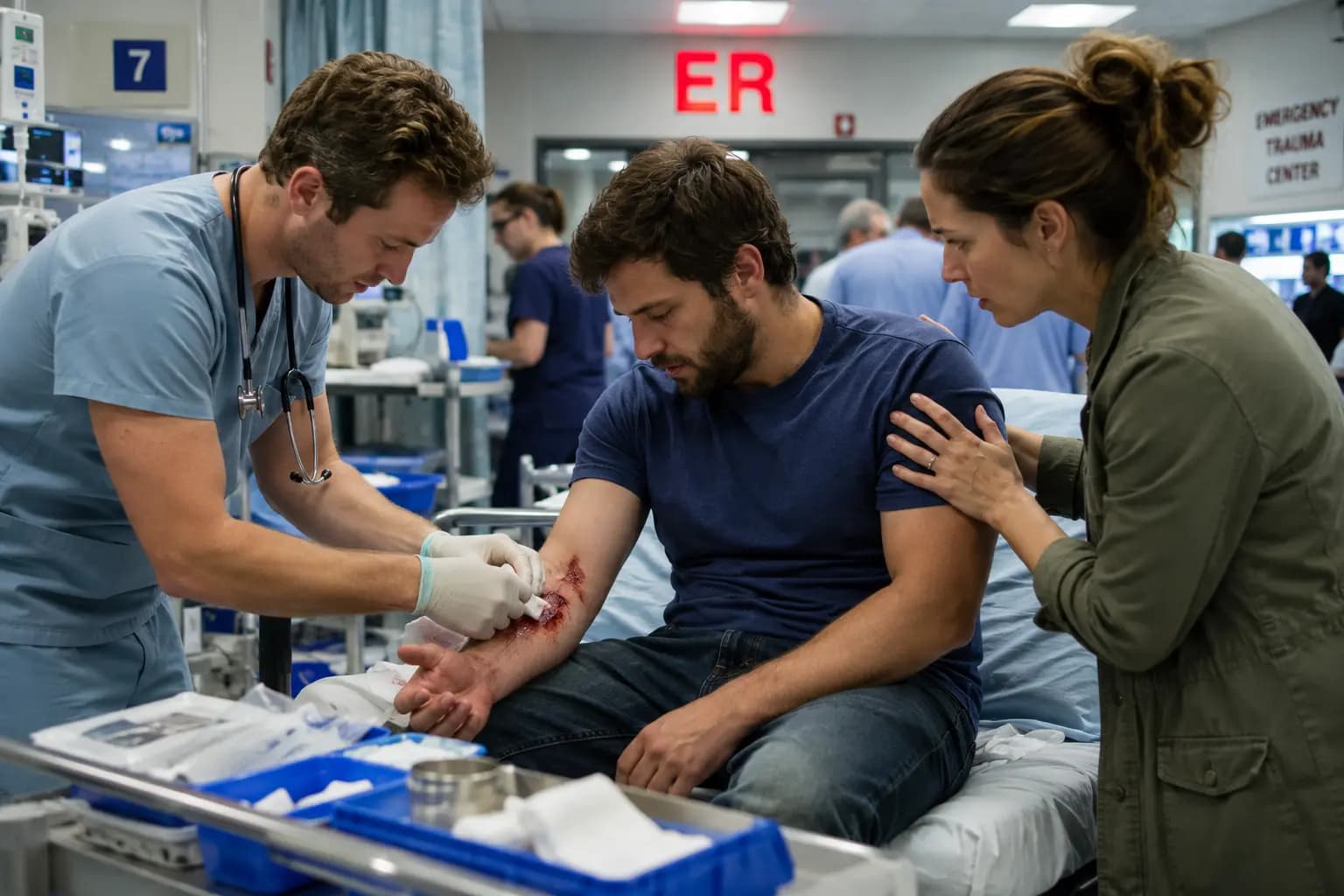
One of the most stressful parts of a possible rabies exposure is not just the bite, scratch, or animal contact itself. It is the next question: where do I go right now? People often freeze because they do not know whether urgent care is enough, whether the ER is excessive, or whether time is being lost while they search online. That is exactly why this page matters.
In real life, many rabies-exposure decisions are not solved by a simple map result. Facility assessment services and rabies vaccine or HRIG/RIG availability vary. Some facilities may provide part of the care or coordinate referral, so call before traveling. A severe wound or another immediate threat to life may require emergency services independently of the rabies assessment.

Why This Decision Matters So Much
A lot of people lose time not because they do not care, but because they care and do not know where to go. They search facilities to contact about rabies PEP, see unclear results, and then guess between urgent care, the ER, and doing nothing for a few hours. That uncertainty is exactly what this page is meant to solve.
The appropriate setting depends on the wound, exposure details, local services, and professional guidance. Use emergency services for severe injury or another immediate threat to life. Otherwise, seek prompt clinician or public-health guidance and call before traveling.
When to Seek Emergency or Professional Guidance
1. The wound itself needs urgent medical attention
Use emergency services for severe bleeding or another immediate threat to life. For other wounds, seek prompt clinician or public-health guidance about the appropriate setting.
2. The exposure is higher-concern and timing matters
Some situations are simply too urgent to spend an hour comparing local listings. Use emergency services for severe injury or another immediate threat to life. For possible rabies exposure, seek prompt clinician or public-health guidance about the appropriate setting.
3. You need a place that can evaluate and escalate fast
Emergency departments can assess urgent injuries and possible exposures, but rabies vaccine and HRIG/RIG services vary. A clinician or public-health authority can direct or coordinate the next step.

When Urgent Care May Be Reasonable
1. The wound is not severe
For wounds that are not medical emergencies, a clinician, nurse line, or public-health authority can advise whether urgent care is an appropriate first contact. Call before traveling to confirm assessment services.
2. You can call ahead first
Urgent care becomes much more practical when you can ask direct questions before leaving home. Without that call, you risk driving to a place that can clean the wound but not help with the rabies side of the decision.
3. You need fast evaluation but not obvious emergency wound care
Some urgent care centers may evaluate the wound and help coordinate the next step, but a clinician or public-health authority should make case-specific treatment and escalation decisions. The problem is that this varies a lot by location. That is why urgent care should be treated as a possible option, not an automatic one.
What Urgent Care Often Can and Cannot Do
This is where people get caught off guard. An urgent care center may be able to:
- evaluate the wound
- clean and dress the injury
- document exposure details for professional assessment
- help coordinate another facility when appropriate
But urgent care may not always:
- provide rabies vaccine onsite
- provide HRIG/RIG onsite
- administer the full PEP pathway on site
- handle complex same-day treatment coordination
That is why the best urgent-care strategy is not blind optimism. It is a call-ahead strategy.

What If You Are Not Sure Which Setting to Contact?
Use emergency services for severe injury or another immediate threat to life. Otherwise, seek prompt clinician, nurse-line, or public-health guidance about the appropriate setting.
For educational first-aid information, see What to Do After a Bite and use your local health department or a healthcare professional for healthcare and public-health resources to call before traveling.

What If No Nearby Facility Can Confirm Current Services?
This is where people often make the worst mistake: they stop searching and wait. Do not do that.
If no nearby facility can confirm current services, contact a clinician, nurse line, emergency service, or local or state health department for prompt guidance. Ask which facilities to contact about current rabies vaccine and HRIG/RIG services. Use emergency services for severe injury or another immediate threat to life.
If you need a fallback plan, read What to Do if You Can’t Find Rabies PEP Care Nearby.
What to Do Before You Leave Home
If the situation allows even a minute or two for preparation, do these things first:
- wash the wound with soap and water
- note the type of animal involved
- note whether the animal can be observed or tested
- call ahead if you are considering urgent care
- bring ID, insurance, and details of the exposure if available
This helps the visit move faster and keeps you from losing time explaining details from memory later.

Common Mistakes People Make
Going to urgent care without calling first
This is one of the most common time-wasters. Some urgent care centers may help a lot. Others may not be able to handle the rabies side of the case at all.
Going to the ER too late because the wound looked okay
Some wounds look minor at first but still involve concerning wound locations or exposure scenarios. Delay can be a bigger problem than the visible size of the wound.

Assuming every hospital can provide rabies vaccine and HRIG/RIG onsite
That is not a safe assumption. Read Do All Hospitals Carry Rabies Vaccine and HRIG? for the full explanation.
Stopping after one dead end
If the first place says no, move to the next step immediately. One failed call is not the end of the care pathway.

Final Thoughts
The smartest care-routing question after a possible rabies exposure is not Which building is closest? It is Which place can safely evaluate this wound and help me move into the right treatment path fast enough?
The appropriate setting depends on the wound, exposure details, local services, and professional guidance. Seek prompt help and call before traveling when possible.
Related Resources
- your local health department or a healthcare professional
- What to Do After a Bite
- Do All Hospitals Carry Rabies Vaccine and HRIG?
- What to Do if You Can’t Find Rabies PEP Care Nearby
Questions to ask the doctor when you arrive
If you have a few minutes before you walk in, write these down. Asking them at the front desk or in triage can save 30+ minutes of confusion and tells the clinician immediately what you actually need.
- Can this facility provide rabies vaccine onsite and human rabies immune globulin (HRIG)? If PEP is indicated for someone not previously vaccinated, a clinician may include both products. Some urgent-care clinics may provide vaccine but may not have HRIG/RIG available onsite. Availability varies, so call before traveling.
- If not, can you call the nearest facility that does — today? A direct facility-to-facility call gets faster results than you driving around. Public-health departments can also coordinate transfers.
- Will I need post-exposure prophylaxis (PEP)? Ask the clinician to walk through how they evaluated the bite circumstances (species, vaccination status, observation rules) so you understand the decision.
- What does the PEP schedule look like for me? The standard US CDC schedule for a person without an immune disorder is 4 doses on days 0, 3, 7, and 14 for previously unvaccinated people. People whose prior vaccination and follow-up qualify for the US previously vaccinated pathway receive 2 doses (days 0 and 3), without HRIG. Immune disorders need specialist review. Follow the schedule prescribed by the treating clinician.
- Where do I get the day-3, day-7, and day-14 doses? Plan the follow-up visits before you leave. If a dose may be delayed or missed, contact the treating clinician for case-specific guidance.
- How is this exposure being reported to public health? Bites are typically reportable to your county health department within 24 hours. Confirm the facility is filing the report or whether you need to.
- What should I watch for in the next 24 to 72 hours? Ask about wound-site symptoms (redness, swelling, drainage), HRIG-injection-site reactions, and rare-but-important signs of vaccine reaction.
- US rabies care costs depend on the professionally confirmed plan and the provider. Ask for an itemized quote covering vaccine doses, HRIG when indicated, administration, consultation, facility charges and any testing. Confirm insurance benefits and patient responsibility directly; coverage does not establish a fixed out-of-pocket amount. Discuss treatment changes or delays with the treating professional.
Bring photo ID, your insurance card, and — if possible — a photo of the animal or the bite. If you have a pet vaccination record showing your animal is up-to-date or a previous PEP/PrEP record for yourself, bring that too. It can inform the professional assessment.
Worried about the bill? ER and urgent care quotes may cover different services. Do not delay professional assessment to compare prices. For billing questions, see how much a rabies shot costs — with and without insurance.
Wondering what services urgent care may provide? See does urgent care give rabies shots? for how services may differ from the ER.
Which schedule applies?
When PEP is indicated, the US schedule for someone never vaccinated and without an immune disorder is wound care, HRIG once, and vaccine on days 0, 3, 7 and 14. Day 0 is the first vaccine date, not necessarily the exposure date. Qualifying previously vaccinated people receive vaccine on days 0 and 3 without HRIG. Immune disorders require specialist guidance, a five-dose regimen through day 28 and antibody testing.
Prior PrEP or PEP records, completion of required PrEP follow-up, immune status and any care received abroad must be reviewed by the treating professional. Do not use a dose count to decide your own treatment. WHO-supported schedules can use different routes and visit counts outside the US. Discuss treatment changes or delays with the treating professional.
Sources: CDC US PEP guidance; ACIP PrEP follow-up guidance; WHO vaccine schedules.