
After a possible exposure: Seek prompt professional assessment; do not wait for observation to finish. Public-health authorities can arrange a full 10-day observation for an eligible dog, cat, or ferret and use the result to guide PEP. Do not start, delay, or stop PEP on your own. A clinician or public-health professional should assess the animal, type of contact, wound depth and site, where the encounter happened and local rabies activity, and options for observation or testing.
How Often Do Dogs Need Rabies Shots?
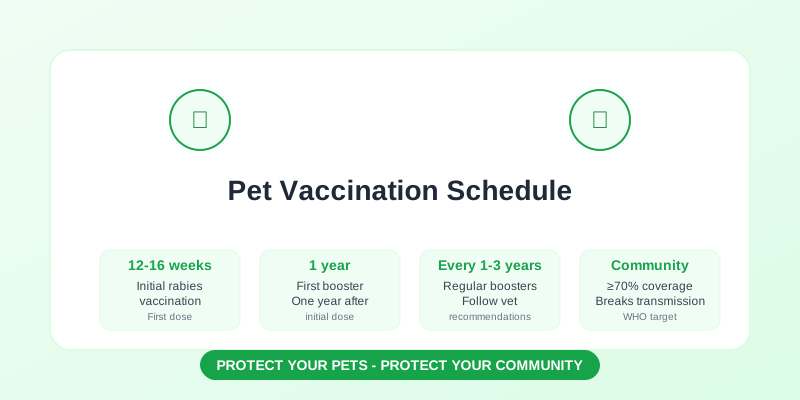
Most dogs need a rabies shot at around 12–16 weeks of age, a booster one year later, and then a booster every 1 to 3 years — the exact interval depends on the vaccine used and your state or local law. After the first one-year booster, many veterinarians use a 3-year rabies vaccine, but some jurisdictions legally require annual (1-year) boosters regardless of the product. Always follow the due date on your dog’s rabies certificate and your local ordinance.
- Puppy: first rabies shot at 12–16 weeks (about 3–4 months), as required by most state laws.
- One year later: a booster 12 months after the first dose — required even when a 3-year vaccine is used.
- Then: every 1 or 3 years, matching the vaccine label and local law.
The practical difference between a “1-year” and “3-year” rabies vaccine is mostly the labeled duration of immunity and how often the law requires re-vaccination — often the vaccine itself is the same product. For the bigger picture, see which animals carry rabies and the signs of rabies in dogs.
Why Rabies Vaccination Is Required for Dogs
Rabies vaccination is not optional in most parts of the United States and many other countries. It is legally required in the majority of jurisdictions and is a cornerstone of rabies control in domestic animals. An unvaccinated dog that bites a person creates significant public health consequences — including extended quarantine, possible euthanasia for rabies testing, and potential legal liability for the owner.
Keeping your dog's rabies vaccination current is one of the simplest and most effective things you can do to protect your pet, your household, and the broader community.
Core Rabies Vaccine Schedule for Dogs
The rabies vaccine schedule for dogs typically follows this general framework, though specific timing may vary by jurisdiction and vaccine product label:
Initial Puppy Vaccination
Puppies generally receive their first rabies vaccine between 12 and 16 weeks of age. Some areas permit vaccination as early as 8 weeks depending on local regulations. Your veterinarian will confirm the appropriate age for your location.
One-Year Booster
A booster is commonly required one year after the initial dose. This first booster is important even in regions that eventually permit 3-year intervals — many states require the 1-year booster before moving to the longer cycle.
Ongoing Boosters
After the first booster, dogs may move to a 1-year or 3-year interval depending on:
- the vaccine product used (some are labeled for 1 year, others for 3 years)
- state and local legal requirements
- your veterinarian's clinical judgment
Cost of Rabies Vaccination for Dogs
Vaccination costs vary widely depending on location and provider type. Private veterinary clinics tend to charge more than community vaccination events. Some shelters and nonprofit organizations offer low-cost or free rabies vaccination clinics, particularly in underserved areas. Costs typically include an exam fee separate from the vaccine itself.
Cost should not be a barrier to vaccination. Many communities hold periodic low-cost vaccination events — check with your local animal control or health department for upcoming dates in your area.
Legal Requirements and Documentation
Most jurisdictions require proof of current rabies vaccination for dog licensing. After each vaccination, your veterinarian will issue a certificate. Keep this document in a safe place — you may need it for:
- annual or biannual dog licensing renewal
- travel across state or international borders
- bite incident response — authorities will request vaccination proof
- boarding facilities or dog parks that require vaccination records
What If a Vaccinated Dog Bites Someone?
Even if your dog is vaccinated, a bite still triggers certain legal and public health obligations. Most jurisdictions require a 10-day observation period to confirm the dog shows no signs of rabies. Vaccination significantly reduces risk but does not eliminate all reporting requirements. If your dog bites someone, contact local animal control and cooperate fully with the process.
What If Your Dog Misses a Booster?
If your dog's rabies vaccination has lapsed, contact your veterinarian immediately. Ask your veterinarian to review the vaccination record, product and local requirements and arrange the appropriate booster. Do not infer a restart schedule from how long the dose is overdue. Do not wait — vaccination gaps can create legal complications and may increase risk in an exposure scenario.
Cost Expectations
The rabies vaccine itself is one of the cheapest pet preventives. The variable cost is the surrounding visit and the product chosen. Realistic 2026 US ranges by setting:
- Ask the clinic for a current price for the specified rabies vaccine and whether administration, examination, licensing or other services are included. Prices for a vaccination-only event and a complete veterinary visit describe different services. Confirm any insurance or wellness-plan reimbursement directly.
- Ask the clinic for a current price for the specified rabies vaccine and whether administration, examination, licensing or other services are included. Prices for a vaccination-only event and a complete veterinary visit describe different services. Confirm any insurance or wellness-plan reimbursement directly.
- Ask the clinic for a current price for the specified rabies vaccine and whether administration, examination, licensing or other services are included. Prices for a vaccination-only event and a complete veterinary visit describe different services. Confirm any insurance or wellness-plan reimbursement directly.
For the full pricing breakdown including pet insurance navigation, see rabies vaccine cost for dogs and the universal how much does a rabies shot cost.
Side Effects to Know About
Most dogs have no reaction at all or only mild side effects: tenderness at the injection site, tiredness for 24-36 hours, mild fever, or reduced appetite for one or two meals. Severe reactions are rare — recent JAVMA data shows about 19 adverse events per 10,000 vaccination visits.
Small breeds and dogs under 11 pounds have around four times the reaction rate of large dogs, and certain breeds (Dachshunds, Pugs, Boston Terriers, French Bulldogs, Miniature Pinschers, Chihuahuas) are higher-risk. See the full picture at side effects of the rabies vaccine in dogs.
Puppies and the First Year
Puppies typically receive their first rabies vaccine between 12 and 16 weeks of age (12 weeks is the AAHA-recommended timing where state law allows), followed by a 1-year booster regardless of when the first dose was given. Puppies are not considered fully immunised until 28 days after the first dose — a legal threshold that matters for licensing, boarding, and bite incidents during that window. For the full puppy-specific guide, see puppy rabies shot guide.
Duration of Immunity
Most US dogs are on either a 1-year or 3-year rabies booster schedule depending on the product used and local law. A longer licensed interval can reduce the number of later visits where local law permits it. Total savings depend on product prices, fees and vaccination history. See how long does the rabies vaccine last for context across humans, dogs, and cats.
Related Guides on SafeRabies
- Puppy rabies shot — timing, cost, 28-day rule
- Rabies vaccine cost for dogs
- Side effects of the rabies vaccine in dogs
- How long does the rabies vaccine last
- After a vaccinated dog bite
- Can you give the rabies vaccine at home?
Sources for Exposure Assessment
- CDC: transmission and professional assessment
- CDC: vaccination and animal observation
- CDC Yellow Book: observation and travel exposures
- WHO: exposure categories and prompt care
Vaccination timing and overdue records should be reviewed by a veterinarian. See CDC veterinary rabies guidance.