
After a possible exposure: Seek prompt professional assessment; do not wait for observation to finish. Public-health authorities can arrange a full 10-day observation for an eligible dog, cat, or ferret and use the result to guide PEP. Do not start, delay, or stop PEP on your own. A clinician or public-health professional should assess the animal, type of contact, wound depth and site, where the encounter happened and local rabies activity, and options for observation or testing.
Why Cats Need Rabies Vaccination
Cats are among the most commonly reported rabid domestic animals in the United States. Despite this, rabies vaccination rates in cats tend to be lower than in dogs, partly because many owners keep cats indoors and underestimate exposure risk. Even indoor cats can encounter bats and other wildlife through open windows, roof vents, or brief outdoor access.
Vaccination protects your cat and also protects your household from potential exposure after a bite or scratch incident. It is legally required in many states and municipalities.
Rabies Injection Schedule for Cats
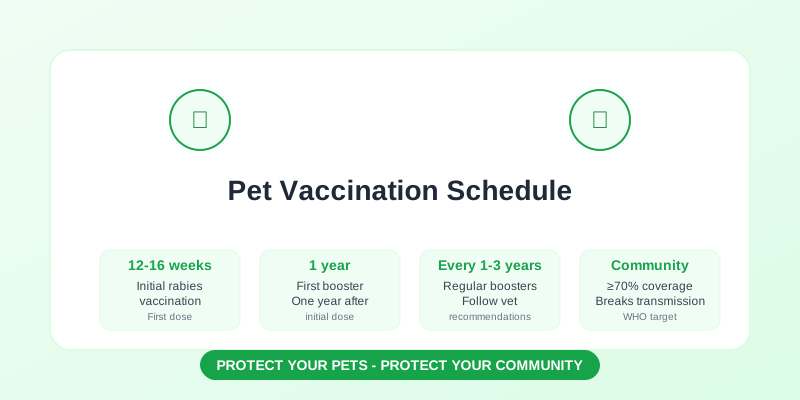
The standard rabies injection schedule for cats generally follows this framework:
First Vaccine
Kittens are typically first vaccinated between 12 and 16 weeks of age. Some products are approved as early as 8 weeks, but timing should follow your veterinarian's recommendation and local law.
One-Year Booster
A booster dose is required approximately one year after the initial vaccine. This applies regardless of whether the area allows longer intervals after that point.
Ongoing Boosters
After the first booster, the interval may shift to every 1 or 3 years depending on:
- the specific vaccine product used
- your state or local legal requirements
- whether your cat has outdoor exposure
- your veterinarian's recommendation
Cost of Rabies Injection for Cats
Costs vary by provider and region. Private veterinary clinics typically charge more than community clinics or low-cost vaccination events. Some animal shelters and nonprofit organizations periodically offer discounted vaccination services. The vaccine product itself is usually low-cost; exam fees are commonly billed separately.
Side Effects of Rabies Injection in Cats
Most cats tolerate the rabies vaccine well. Common temporary side effects include:
- mild lethargy or tiredness for 24 to 48 hours
- soreness or swelling at the injection site
- reduced appetite briefly after vaccination
When to Call the Vet
Contact your veterinarian promptly if you notice:
- significant swelling at the injection site that persists or continues to grow
- facial swelling, hives, or difficulty breathing — signs of an allergic reaction requiring urgent care
- vomiting or collapse shortly after vaccination
- a firm lump at the injection site that persists for more than 3 to 4 weeks
A rare but recognized complication in cats is injection-site sarcoma, a type of tumor that can develop at vaccine administration sites. Modern vaccines and injection protocols have reduced this risk, but monitoring injection sites and reporting persistent lumps to your vet remains important.
Legal Requirements for Cat Vaccination
Many states and municipalities legally require rabies vaccination for cats just as they do for dogs. Requirements vary — check with your local animal control or health department to confirm what applies in your area. Vaccination documentation is critical in bite incident scenarios, where authorities will request proof of your cat's current vaccination status.
What If a Vaccinated Cat Bites Someone?
Even a vaccinated cat can trigger a public health response after a bite. The standard requirement is usually a 10-day observation period. Current vaccination documentation helps confirm your cat's status and can prevent euthanasia for rabies testing in many cases. Always keep records current and accessible.
What If Your Cat Misses a Booster?
Contact your veterinarian promptly. Ask your veterinarian to review the vaccination record, product and local requirements and arrange the appropriate booster. Do not infer a restart schedule from how long the dose is overdue. Do not delay — lapses can create legal complications and reduce protection during an exposure event.
Schedule: First Dose and Boosters
The AAFP/AAHA recommended schedule starts the first rabies vaccine at about 12 weeks (3 months) of age, followed by a 1-year booster, then 1-year or 3-year intervals depending on the product used. Most US vets default to non-adjuvanted (PureVax-type) products to reduce injection-site sarcoma risk. For the full schedule details and state law variation, see how often do cats need rabies shots.
Indoor Cats Are Not Exempt
Requirements vary by state and local jurisdiction. Do not assume indoor confinement creates an exemption; ask your veterinarian and local authority which rules apply. Indoor cats can encounter bats or escape outdoors.
If Your Cat Catches a Bat
Contact a veterinarian and public-health or animal-control authority promptly. Management depends on species, prior vaccination records, the exposure and local rules. Overdue vaccination is assessed case by case and is not automatically treated as never vaccinated. CDC recommends euthanasia for never-vaccinated dogs or cats exposed to rabies; if declined, its guidance calls for immediate vaccination and strict four-month quarantine. Officials direct the case.
Cost of Cat Rabies Vaccination
Ask the clinic for a current price for the specified rabies vaccine and whether administration, examination, licensing or other services are included. Prices for a vaccination-only event and a complete veterinary visit describe different services. Confirm any insurance or wellness-plan reimbursement directly. Related guide: rabies vaccine cost for cats.
Related Guides on SafeRabies
- How often do cats need rabies shots
- Do indoor cats need rabies shots
- Rabies vaccine cost for cats
- My cat caught a bat — what now
- How to tell if a cat has rabies
Sources for Exposure Assessment
- CDC: transmission and professional assessment
- CDC: vaccination and animal observation
- CDC Yellow Book: observation and travel exposures
- WHO: exposure categories and prompt care
Vaccination timing and overdue records should be reviewed by a veterinarian. See CDC veterinary rabies guidance.
Legal scope and official guidance
Requirements vary by state and local jurisdiction. This article is educational, not legal advice. Physician medical review does not verify legal rules or veterinary management. See CDC guidance for veterinarians on vaccination, bite observation and animal exposures; guidance is not a substitute for applicable law. Confirm instructions with the responsible authority.