
SafeRabies
Animal bite or possible exposure?Start emergency steps immediately →

Blog / Vaccines

🚨 High Risk Topic Medically Reviewed9 min read

How Often Do Cats Need Rabies Shots? Full AAFP Schedule for 2026

How often cats need rabies shots — kitten first dose, the one-year booster, and the 1-year vs 3-year non-adjuvanted schedule that most US vets now use.

By SafeRabies Editorial Team · May 23, 2026

How Often Do Cats Need Rabies Shots? Full AAFP Schedule for 2026

Bitten or exposed? Act within hours.

Find Clinic →

Do This RIGHT NOW — 5 Immediate Steps

Read this before the full article. Readable in under 30 seconds.

  1. Step 1

    Wash the wound immediately

    Soap and water for 15 full minutes. This is the single most effective first action — it physically reduces viral load at the site.

  2. Step 2

    Call a doctor or ER now

    Describe the exposure. Don't wait for symptoms — rabies is nearly 100% fatal once they appear, but PEP is nearly 100% effective before.

  3. Step 3

    Start PEP the same day

    Post-exposure prophylaxis (rabies immune globulin + vaccine series) must begin before symptoms. Ask specifically about HRIG.

  4. Step 4

    Find a rabies treatment clinic

    Many ERs don't stock rabies vaccine. Use the SafeRabies clinic finder to locate the nearest centre that can treat you right now.

    Open Clinic Finder →
  5. Step 5

    Report the animal

    Contact animal control. If the animal can be observed or tested, its status may adjust your treatment plan.

Quick Answer

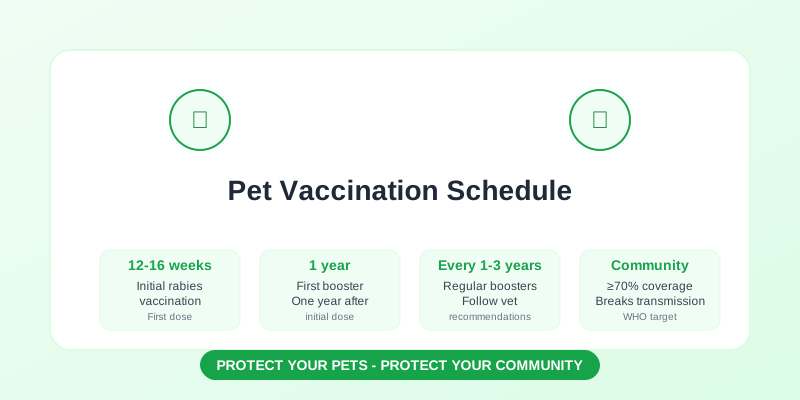
Cats need their first rabies shot at about 12 weeks of age, followed by a booster exactly one year later. After that, AAHA/AAFP guidelines support boosters every 3 years using a non-adjuvanted 3-year vaccine, or annually if a 1-year product is used. State and county laws determine the legal booster interval, which can be stricter than the vaccine label. Indoor-only status is not an exemption.

Key Takeaways

  • Kittens get their first rabies vaccine at about 12 weeks of age.
  • A 1-year booster is required regardless of when the first dose was given.
  • After the first booster, schedule is every 1 or 3 years depending on the vaccine product and local law.
  • Non-adjuvanted vaccines (PureVax-type) are now preferred by most US vets to reduce injection-site sarcoma risk.
  • Indoor cats follow the same schedule as outdoor cats — there is no legal exemption for indoor confinement.

The Standard Cat Rabies Shot Schedule

The schedule recommended by the American Association of Feline Practitioners (AAFP), the American Animal Hospital Association (AAHA), and reflected in most US state laws looks like this:

  • First rabies vaccine: at about 12 weeks (3 months) of age.
  • First booster: one year after the initial dose, regardless of the age at which it was given.
  • Ongoing boosters: every 3 years using a non-adjuvanted 3-year product, or annually if a 1-year product is used. Local law sets the legal maximum interval.

Note that the vaccine label does not always match the law. Some states and counties still require annual boosters even if a 3-year vaccine product is used. Your veterinarian will combine the product label with local rules to set the actual schedule for your cat.

Why 12 Weeks for the First Dose

Kittens are born with maternal antibodies from colostrum that interfere with vaccine response. If the rabies vaccine is given too early, the mother's antibodies neutralise the vaccine antigen before the kitten's own immune system can respond. By 12 weeks, maternal antibody levels have usually declined far enough for the vaccine to take effect reliably.

A few US states permit the first feline rabies dose earlier — as young as 8 weeks under specific products — but 12 weeks is the standard recommendation across AAHA, AAFP, and most veterinary practices.

The One-Year Booster Is Not Optional

The first booster is given exactly one year after the kitten's initial rabies dose, even if the cat is moving onto a 3-year vaccine product afterward. This one-year booster is required by state law in nearly every US jurisdiction and is the moment the cat transitions from "newly vaccinated" to "fully maintained" rabies status for legal purposes.

Missing the one-year booster does not necessarily mean restarting the series, but it does create complications:

  • The cat may be legally considered unvaccinated until the booster is given.
  • Boarding, grooming, and travel facilities may refuse service.
  • A bite incident during the lapsed window can trigger stricter quarantine.

If your cat's booster has lapsed, contact your vet promptly. A single overdue booster is usually enough to reset legal status — see our guide on what to do after a missed rabies dose.

1-Year vs 3-Year Cat Rabies Vaccines

After the first booster, your cat will be on either a 1-year or 3-year rabies schedule. Both products are widely used in the US, and the choice usually comes down to your vet's product preference and your state's legal interval.

1-Year Products

Some non-adjuvanted vaccines are licensed only for 1-year intervals. Cats on these products receive a rabies booster every 12 months.

3-Year Products

Non-adjuvanted 3-year products are now available and widely preferred. After the first booster, cats vaccinated with a 3-year product receive their next dose three years later — provided local law permits the 3-year interval. Some US states still legally require annual boosters even if the vaccine is licensed for 3 years.

Per-dose cost is roughly similar between products. Because you visit one-third as often, lifetime cost on the 3-year schedule is meaningfully lower. For broader duration-of-immunity context, see how long does the rabies vaccine last.

Non-Adjuvanted Vaccines and Injection-Site Sarcomas

This is the most cat-specific consideration in the schedule. Older adjuvanted rabies vaccines were effective but carried a small risk of injection-site sarcoma (a malignant tumour at the injection site) in cats. The risk was low but real, and it drove a long-term shift toward non-adjuvanted feline vaccines.

Most US veterinarians now default to non-adjuvanted (PureVax-type) rabies vaccines for cats. AAFP guidelines explicitly favour non-adjuvanted products where available. If you are unsure what product was used on your cat, ask your vet — the vaccine product is recorded on the rabies certificate.

Cats with prior vaccine reactions may receive their boosters under more careful monitoring or with antihistamine pre-treatment. Do not skip vaccination because of a mild prior reaction — talk to your vet about safer protocols instead.

Indoor-Only Cats: Same Schedule

No US state law exempts indoor-only cats from rabies vaccination. The schedule is identical to outdoor cats. The argument for this is practical, not just legal:

  • Bats are the leading source of human rabies in the US and routinely enter homes through attics, fireplaces, and open windows. An indoor cat is the most likely household member to catch a bat.
  • Cats escape — doors get left open, screens fail, contractors come and go. Even a brief escape is exposure.
  • Wildlife enters homes — raccoons, skunks, and foxes get into garages, attics, and crawl spaces.

For the full picture of indoor cat law and risk, see our dedicated guide on do indoor cats need rabies shots.

What Happens If You Miss a Cat's Rabies Booster

  • Slightly overdue (within 30-90 days): in most cases, a single booster restores current status with no need to restart. Your cat is usually still considered protected during the brief lapse.
  • Significantly overdue (more than a few months): legally considered unvaccinated until a new booster is given. A bite incident during this window triggers stricter response — possible 4-6 month strict quarantine at owner cost, or in some jurisdictions, euthanasia and rabies testing.
  • Lost rabies certificate: the vet that issued it can usually re-issue from records. If records are lost too, your cat may need to be re-vaccinated to restore proof.

Cost of Keeping a Cat's rabies vaccine Current

  • County or shelter clinics: $0-$15 per dose, often paired with low-cost spay/neuter events.
  • Pet store mobile vet clinics: $19-$28 per dose.
  • Private veterinary practices: $20-$70 per dose plus a possible exam fee.

Because a 3-year product means one visit instead of three, lifetime cat rabies cost can be as low as a few dollars per year. For complete cost detail, see how much does a rabies shot cost.

Side Effects to Watch For

Mild and Expected

  • Tenderness or slight swelling at the injection site
  • Tiredness for a day or two
  • Mild fever
  • Decreased appetite for one or two meals

Worth Watching

  • Injection-site lump persisting more than 3 weeks — ask your vet to evaluate
  • Mild lameness in the injected leg

Urgent — Call Your Vet Immediately

  • Facial swelling, hives, or generalized welts
  • Vomiting or diarrhea within hours of the vaccine
  • Difficulty breathing or collapse
  • Seizures or sudden weakness

Severe vaccine reactions in cats are rare but require urgent veterinary care. Cats with prior reactions should be vaccinated under careful monitoring rather than skipping the dose entirely.

Don't Delay

Need a rabies clinic near you?

Find the nearest treatment centre — open now, in your area.

Find Nearest Clinic

Indoor Cats Follow the Same Rabies Schedule

No US state law exempts indoor-only cats from rabies vaccination. Bats enter homes, cats escape, and the legal consequences of an unvaccinated cat involved in a bite incident are far more severe than those of a vaccinated one. The schedule below applies regardless of confinement.

Standard Cat Rabies Vaccination Schedule

  • About 12 weeks: first rabies vaccine
  • One year after first dose: legally required booster
  • Then every 1 or 3 years based on product and state law
  • Choose a non-adjuvanted (PureVax-type) product where possible
  • Keep the rabies certificate accessible for licensing, boarding, and travel
  • Set a calendar reminder for the next booster date
  • Confirm state and county specific timing with your vet

Take the Next Step

Important Note

This article reflects current AAHA/AAFP feline vaccination guidelines and is for educational purposes — it should not replace direct veterinary advice. State and county booster requirements vary; the legal maximum interval can be shorter than the vaccine label. Confirm your specific cat's schedule with a licensed veterinarian, especially for cats with prior vaccine reactions or other health considerations.

Frequently Asked Questions

How often do cats need rabies shots?

Cats get their first rabies vaccine at about 12 weeks of age, then a booster exactly one year later. After that, boosters are given every 3 years using a non-adjuvanted 3-year product, or annually if a 1-year product is used. State and county laws set the legal maximum interval, which can be shorter than the vaccine label allows.

When should a kitten get its first rabies shot?

AAFP and AAHA guidelines recommend the first rabies dose at about 12 weeks of age. A few US states permit earlier vaccination with specific products, but 12 weeks is the standard across most veterinary practices. The dose works because maternal antibodies have declined enough by then for the kitten's immune system to respond.

Do indoor cats need rabies shots every year?

Indoor cats follow the same schedule as outdoor cats — there is no legal exemption for indoor confinement. After the initial dose and one-year booster, indoor cats typically move to a 3-year non-adjuvanted product schedule, unless local law requires annual boosters.

What is the difference between 1-year and 3-year cat rabies vaccines?

Both are non-adjuvanted in modern practice and provide effective protection. The difference is the licensed interval: cats on a 1-year product need a booster annually, while cats on a 3-year product need one every three years. Local law sometimes requires the shorter interval even when a 3-year product is used.

Why do vets prefer non-adjuvanted rabies vaccines for cats?

Older adjuvanted rabies vaccines carried a small risk of injection-site sarcoma — a malignant tumour at the vaccination location — in cats. Non-adjuvanted vaccines (often marketed as PureVax) reduce this risk substantially while still providing effective rabies protection. Most US vets now default to non-adjuvanted products for cats.

What happens if I miss my cat's rabies booster?

A slightly overdue booster (within 30-90 days) is usually corrected with a single dose, and the cat is generally still considered protected during the brief lapse. A significantly overdue cat is legally considered unvaccinated until the booster is given — and a bite incident during that window triggers far stricter quarantine consequences.