
After a possible exposure: Seek prompt professional assessment; do not wait for observation to finish. Public-health authorities can arrange a full 10-day observation for an eligible dog, cat, or ferret and use the result to guide PEP. Do not start, delay, or stop PEP on your own. A clinician or public-health professional should assess the animal, type of contact, wound depth and site, where the encounter happened and local rabies activity, and options for observation or testing.
Short Answer: Yes, in Almost Every Case
Indoor cats need a veterinary vaccination plan. Public-health recommendations and legal requirements are separate: check the applicable state and local rules.
Indoor housing does not eliminate exposure risk because cats can encounter bats or escape outdoors. Whether vaccination is legally required, and which exemptions apply, depends on the jurisdiction.
Checking State and Local Requirements
Requirements vary by state and local jurisdiction. SafeRabies has not verified a current nationwide list of cat-vaccination laws. Confirm covered species, ages, exemptions and local ordinances with the state veterinarian or health department and local animal control.
For example, Illinois Animal Control Act, section 8 includes companion cats aged four months or older and separate provisions for feral cats. This is an Illinois rule, not a nationwide rule.
Why Indoor Cats Are Not as Protected as Owners Assume
1. Bats Get Inside
Bats are the leading source of human rabies cases in the United States. They also routinely enter homes — through attics, fireplaces, gaps in eaves, and open windows. A bat in the bedroom is not a hypothetical scenario; it is one of the most common exposure requiring prompt professional assessments the CDC documents every year.
An indoor cat that catches a bat — and most cats will, given the chance — is at meaningful rabies exposure risk. For the full picture of bat-related rabies risk, see our bat exposure guide.
2. Cats Escape
Indoor housing does not guarantee a cat will never escape. Doors and windows can be left open, so discuss vaccination with your veterinarian.
3. Wildlife Comes In
Raccoons and skunks — two of the highest-risk rabies reservoirs in the US — enter homes through pet doors, garages, attics, and crawl spaces. So do foxes, in more rural areas. Cats are territorial and will engage with intruding wildlife.
4. Other Animals in the Household
If your indoor cat lives with a dog that does go outside, the dog can carry exposure risk back into the home. The same applies if there is any contact with stray cats, foster animals, or recently rescued pets whose history is uncertain.
What Happens If an Unvaccinated Indoor Cat Bites Someone
This is the legal and practical consequence most owners do not anticipate.
In every US jurisdiction, an animal involved in a human bite is subject to rabies exposure checklist. The outcome depends on the cat's vaccination status:
- Healthy cat that bites someone: CDC guidance distinguishes a healthy dog, cat or ferret that bites someone from an animal that was itself exposed to rabies. A healthy biting animal may undergo a 10-day observation under public-health coordination regardless of vaccination history. The authority determines the location and conditions; home observation is not automatic.
- Missing or overdue vaccination: provide all available records to the authority. Vaccination status alone does not turn a bite observation into a months-long quarantine.
Ask the responsible authority which observation conditions and costs apply; do not infer the outcome from vaccination status alone.
What Happens If Your Indoor Cat Is Exposed to a Bat
This is the scenario every cat owner should think about before it happens.
- Currently vaccinated cat: typically a booster shot within 96 hours and a 45-day observation period at home.
- Overdue or never vaccinated: Contact a veterinarian and public-health or animal-control authority promptly. Management depends on species, prior vaccination records, the exposure and local rules. Overdue vaccination is assessed case by case and is not automatically treated as never vaccinated. CDC recommends euthanasia for never-vaccinated dogs or cats exposed to rabies; if declined, its guidance calls for immediate vaccination and strict four-month quarantine. Officials direct the case.
For owners who keep cats indoors specifically to protect them, this is the opposite of what was intended. Rabies vaccination is the simplest way to avoid the worst-case outcome of a bat encounter.
Practical Considerations Beyond Law and Bats
- Boarding and travel: almost all reputable boarding facilities, groomers, and pet hotels require a current rabies certificate, even for cats that never leave the house otherwise.
- Veterinary hospitalisation: emergency vet hospitals often require proof of rabies vaccination before admitting a cat for overnight care.
- Interstate or international travel: moving with a cat almost always requires proof of rabies vaccination, often with specific timing windows before travel.
- Ask the clinic for a current price for the specified rabies vaccine and whether administration, examination, licensing or other services are included. Prices for a vaccination-only event and a complete veterinary visit describe different services. Confirm any insurance or wellness-plan reimbursement directly. Related guide: rabies shot cost across settings.
Schedule for Indoor Cats Specifically
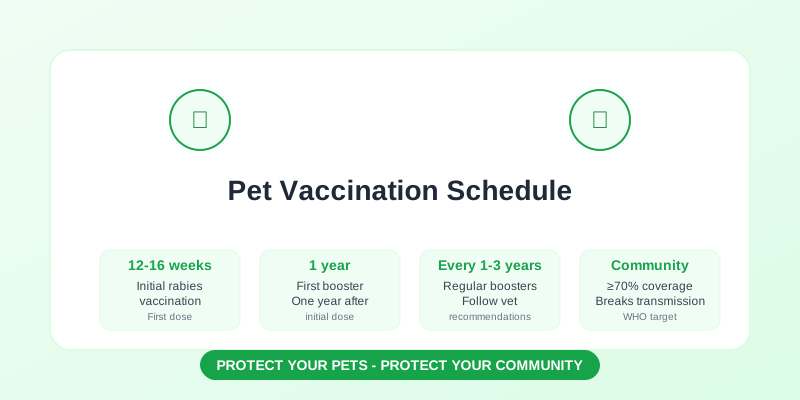
The schedule for indoor cats is the same as for outdoor cats. The first dose is typically given between 12 and 16 weeks of age, a booster one year later, then 1-year or 3-year boosters depending on the product used and local law. Most US vets default to the non-adjuvanted 3-year product for cats to reduce injection-site reaction risk.
For full duration-of-immunity details, see how long does the rabies vaccine last. For the full feline vaccination context, see rabies injection for cats.
Sources for Exposure Assessment
- CDC: transmission and professional assessment
- CDC: vaccination and animal observation
- CDC Yellow Book: observation and travel exposures
- WHO: exposure categories and prompt care
Legal scope and official guidance
Requirements vary by state and local jurisdiction. This article is educational, not legal advice. Physician medical review does not verify legal rules or veterinary management. See CDC guidance for veterinarians on vaccination, bite observation and animal exposures; guidance is not a substitute for applicable law. Confirm instructions with the responsible authority.