
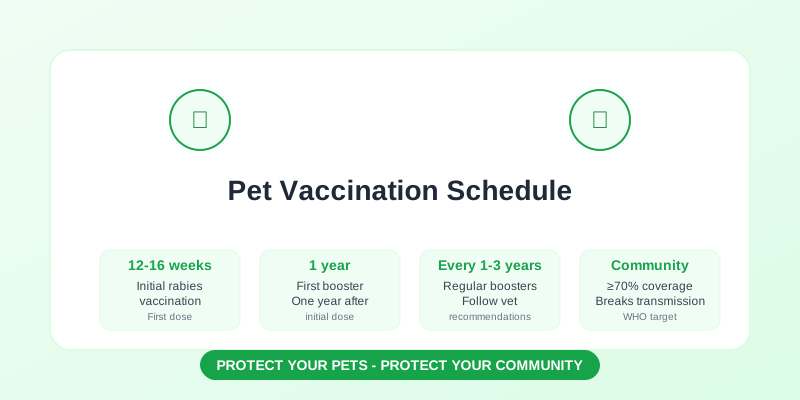
After a possible exposure: Seek prompt professional assessment; do not wait for observation to finish. Public-health authorities can arrange a full 10-day observation for an eligible dog, cat, or ferret and use the result to guide PEP. Do not start, delay, or stop PEP on your own. A clinician or public-health professional should assess the animal, type of contact, wound depth and site, where the encounter happened and local rabies activity, and options for observation or testing.
How Often Do Dogs React to the Rabies Vaccine?
The most rigorous recent answer comes from a 2023 study published in the Journal of the American Veterinary Medical Association covering 4,654,187 dogs vaccinated across more than 16 million office visits at 1,119 US hospitals over a five-year window. Adverse events were recorded after 31,197 vaccination visits — about 19 per 10,000 visits, or 0.19%.
Among individual vaccines tracked, the rabies vaccine had the highest individual adverse event rate. The good news is that even at the highest, the overall rate remains low and the vast majority of reactions are mild and resolve on their own.
Common, Expected Side Effects
Most reactions land in this category. They are mild, short-lived, and require no intervention beyond a quiet day or two at home.
- Soreness or tenderness at the injection site. Your dog may flinch when the area is touched or carry the leg gingerly for a day.
- Mild lethargy or reduced activity for 24-36 hours.
- Mild fever (100.5-103°F is normal in dogs; a brief rise to 103-103.5°F after vaccination is usually unremarkable).
- Decreased appetite for one or two meals.
- Slight injection-site swelling — a small, soft, painless lump that resolves within a few days.
None of these require veterinary care unless they persist beyond 48-72 hours or are clearly worsening.
Less Common Reactions Worth Watching
These are not emergencies on their own, but they warrant a phone call to your vet:
- A firm lump at the injection site lasting more than 3 weeks. Most resolve on their own; persistent lumps should be evaluated to rule out an injection-site reaction or, very rarely, a tumour.
- Mild lameness or limping in the injected leg lasting more than 2-3 days.
- Loose stool or one episode of vomiting within 24 hours of vaccination.
- Itchiness or scratching without skin breakdown.
Severe Reactions: Rare but Urgent
Severe reactions almost always appear within hours of vaccination. Anaphylaxis in particular usually develops within minutes to about two hours. Recent veterinary data put the anaphylaxis rate at roughly 0.343 per 10,000 vaccinations, or about three in 100,000.
Call Your Vet or an Emergency Hospital Immediately If You See:
- Facial swelling — the muzzle, lips, or area around the eyes puffing visibly
- Hives or welts on the body
- Repeated vomiting or diarrhea
- Difficulty breathing, noisy breathing, or coughing
- Pale or grey gums
- Sudden weakness, wobbliness, or collapse
- Seizure activity
Anaphylaxis is treatable when caught quickly. Epinephrine, IV fluids, antihistamines, and corticosteroids stabilise most dogs within minutes. The most important thing you can do is get the dog in front of a veterinarian fast — do not wait to see if symptoms resolve on their own.
Which Dogs Are at Higher Risk for Reactions?
The 2023 JAVMA study and earlier surveillance data point to several consistent risk factors.
Small Breeds and Lower Body Weight
The adverse event rate is inversely correlated with body weight. Dogs weighing 11 pounds (5 kg) or less had roughly four times the reaction rate of dogs over 99 pounds. The standard rabies dose is the same regardless of body weight, which contributes to this pattern.
Breeds With the Highest Reported Reaction Rates
- Dachshund
- Pug
- Boston Terrier
- Miniature Pinscher
- Chihuahua
- French Bulldog
If your dog is on this list, talk to your vet before the next vaccination visit. A common protocol is to split combination vaccines across two or three visits rather than giving four shots in one appointment, since multiple vaccines on the same day increases reaction risk.
Multiple Vaccines in One Visit
Reaction rates rise from 1 vaccine to 4 vaccines given at the same appointment. For small or reaction-prone breeds, ask your vet about staggering — for example, separating the rabies vaccine from DHPP or leptospirosis by 2-4 weeks.
Dogs With a Prior Reaction History
If a previous vaccine triggered hives, swelling, or vomiting, the next one should be given under monitoring. Pre-medication with diphenhydramine (an antihistamine) and a 1-2 hour observation period in the clinic are common precautions. Do not skip the rabies booster entirely — talk to your vet about safer alternatives rather than leaving your dog unvaccinated.
How to Reduce Reaction Risk
- Schedule the vaccine early in the day so you can monitor your dog through normal clinic hours.
- Avoid stacking vaccines in small or reaction-prone dogs — request a split schedule if needed.
- Keep your dog calm for the rest of the day; reduce activity but allow free access to water.
- Watch the first 2 hours closely — most severe reactions appear in that window.
- Make a note of the vaccine product and lot number on the rabies certificate, in case a reaction occurs.
- Carry your vet's after-hours number until the next morning.
What If the Reaction Means Skipping the Booster?
It almost never does. Even dogs with prior moderate reactions can usually be vaccinated safely with pre-medication and observation. Skipping the rabies vaccine entirely has consequences far worse than a managed reaction:
- Vaccination, licensing, medical-exemption and penalty rules vary by state and local jurisdiction. Ask your veterinarian and animal-control authority which requirements apply.
- CDC guidance distinguishes a healthy dog, cat or ferret that bites someone from an animal that was itself exposed to rabies. A healthy biting animal may undergo a 10-day observation under public-health coordination regardless of vaccination history. The authority determines the location and conditions; home observation is not automatic.
- Boarding, grooming, dog parks, and travel almost always require a current rabies certificate.
For genuinely situations needing prompt professional assessment, AVMA policy allows certain medical exemptions in some states. These exemptions are veterinarian-issued, specific to documented prior reactions, and only practical in the small number of states that recognise them. Talk to your vet about whether your dog qualifies.
Side Effect Timeline at a Glance
- Within minutes to 2 hours: anaphylaxis risk window — most severe reactions appear here.
- Within 24 hours: mild lethargy, fever, decreased appetite, injection site soreness.
- 24-48 hours: mild side effects typically peak then resolve.
- 3-7 days: any persistent lameness or injection-site swelling should be improving by now.
- 3+ weeks: a persistent injection-site lump warrants a vet check.
How Dog Rabies Vaccine Safety Fits Into the Bigger Picture
- Compared to cats, dogs have a much lower risk of injection-site sarcomas, which is why the non-adjuvanted vaccine movement has been more cat-focused — see cat rabies schedule and PureVax considerations.
- For full schedule and duration context, see how long does the rabies vaccine last.
- For the rest of the dog rabies picture, see rabies vaccine for dogs and the cost-focused rabies vaccine cost for dogs.
- For puppies specifically, see puppy rabies shot guide.
The headline summary: severe reactions exist, but they are rare, treatable when caught quickly, and not a reason to leave a dog unvaccinated. The protection rabies vaccination provides — to the dog, to the household, and to the wider community — is overwhelmingly worth the small reaction risk.
Sources for Exposure Assessment
- CDC: transmission and professional assessment
- CDC: vaccination and animal observation
- CDC Yellow Book: observation and travel exposures
- WHO: exposure categories and prompt care
Legal scope and official guidance
Requirements vary by state and local jurisdiction. This article is educational, not legal advice. Physician medical review does not verify legal rules or veterinary management. See CDC guidance for veterinarians on vaccination, bite observation and animal exposures; guidance is not a substitute for applicable law. Confirm instructions with the responsible authority.