
After a possible exposure: Seek prompt professional assessment; do not wait for observation to finish. Public-health authorities can arrange a full 10-day observation for an eligible dog, cat, or ferret and use the result to guide PEP. Do not start, delay, or stop PEP on your own. A clinician or public-health professional should assess the animal, type of contact, wound depth and site, where the encounter happened and local rabies activity, and options for observation or testing.
When to Give a Puppy Its First Rabies Shot
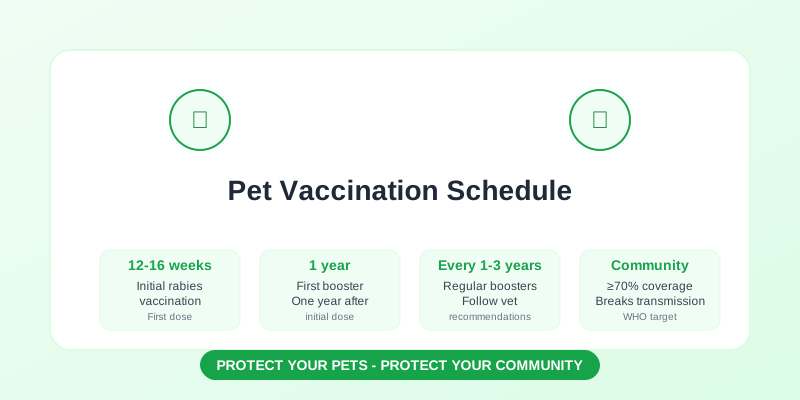
The standard age range is 12 to 16 weeks, with the American Animal Hospital Association (AAHA) recommending 12 weeks in jurisdictions that allow it. The exact timing is set by your state or county law and confirmed by your veterinarian. The rabies vaccine is classified by AAHA and the AVMA as a core vaccine — meaning every dog should receive it regardless of lifestyle, breed, or environment.
A few states permit the first dose as early as 8 weeks, but most align with the AAHA recommendation. Some areas also allow flexibility up to 16 weeks for puppies that have not had access to a vet earlier. Either way, the 12-16 week window is the practical norm across the US.
Why the Timing Matters
Maternal Antibody Interference
Puppies are born with antibodies from their mother's colostrum. Those antibodies protect them in early life but also interfere with vaccine response — if a rabies vaccine is given too early, the mother's antibodies neutralise the vaccine antigen before the puppy's own immune system can respond. By 12 weeks, maternal antibodies have usually declined enough for the vaccine to take effect reliably.
Legal Compliance
Dog vaccination requirements vary by state and locality, including the covered age, licensing rules, schedules, and exemptions. Confirm the current rule with the appropriate state and local authorities. Where a requirement applies, an overdue vaccination can affect licensing and how authorities handle travel, bite incidents, or rabies exposure.
Real-World Exposure Risk
Puppies that go outdoors, attend puppy classes, visit dog parks, or meet other animals are at meaningful exposure risk to wildlife, stray animals, or under-vaccinated dogs. The window between the first dose and full immunity is the riskiest time — see the section on the 28-day rule below.
How the Rabies Shot Fits Into the Wider Puppy Vaccine Schedule
The first rabies dose lands near the end of the standard puppy vaccine series. Here is the typical schedule used by most US veterinarians, with the rabies dose highlighted.
- 6-8 weeks: first DHPP combination vaccine (distemper, hepatitis, parainfluenza, parvovirus), and the first deworming.
- 10-12 weeks: second DHPP, bordetella (kennel cough) if applicable.
- 12-16 weeks: first rabies vaccine, third DHPP, leptospirosis (in lifestyle-appropriate cases), Lyme (in tick-endemic regions).
- 16+ weeks: final DHPP if not yet completed.
- 1 year after first dose: rabies booster (confirm the applicable local rule and vaccine product label).
- Every 1 or 3 years thereafter: rabies booster on the schedule allowed by your state and the vaccine product used.
For full vaccine schedule and duration of immunity details, see our guide on how long the rabies vaccine lasts and the dedicated rabies vaccine for dogs guide.
The 28-Day Rule: When Your Puppy Is Actually Immunised
Most pet owners assume a puppy is protected the moment it leaves the vet's office with a rabies shot. That is not the case.
A puppy is not considered fully immunised against rabies until 28 days after the first dose. This timing is recognised by the National Association of State Public Health Veterinarians (NASPHV); legal definitions and requirements must be checked for the applicable jurisdiction.
What Changes at the 28-Day Mark
- CDC’s 28-day immunization guidance does not itself establish legal vaccination status in every jurisdiction.
- CDC guidance distinguishes a healthy dog, cat or ferret that bites someone from an animal that was itself exposed to rabies. A healthy biting animal may undergo a 10-day observation under public-health coordination regardless of vaccination history. The authority determines the location and conditions; home observation is not automatic.
- The rabies certificate becomes valid for licensing, boarding, and travel purposes.
What to Be Careful About Before 28 Days
- Limit unsupervised contact with stray dogs and unknown animals.
- Avoid wildlife habitat — wooded edges at dawn/dusk, areas with known raccoon, skunk, or fox activity.
- Be cautious at high-traffic dog parks where vaccination status of other dogs is unknown.
- Keep the puppy away from bats, both inside and outside the home.
For the framework that applies if a puppy is involved in a bite, see the 10-day observation rule explained.
How Much Does a Puppy Rabies Shot Cost?
Ask for an itemized puppy-visit quote identifying the vaccine product, administration and other recommended services. Do not assume the price matches an adult visit.
- Ask the clinic for a current price for the specified rabies vaccine and whether administration, examination, licensing or other services are included. Prices for a vaccination-only event and a complete veterinary visit describe different services. Confirm any insurance or wellness-plan reimbursement directly.
The full first-year cost is what surprises new owners — not the rabies dose itself but the bundled visit. For a complete cost breakdown across humans, dogs, and cats, see how much does a rabies shot cost and the dedicated dog rabies vaccine cost guide.
Side Effects to Watch For
Mild side effects after a rabies shot are common and expected. Most resolve within 24-48 hours.
Mild and Expected
- Tenderness or mild swelling at the injection site
- Tiredness or reduced activity for a day or two
- Mild fever
- Decreased appetite for one meal or two
Less Common, Worth Watching
- A small persistent lump at the injection site lasting more than 3 weeks
- Mild lameness in the injected leg for a few days
Rare and Urgent — Call Your Vet Immediately
- Facial swelling, hives, or raised welts on the body
- Vomiting or diarrhea within hours of the vaccine
- Difficulty breathing or collapse
- Unsteadiness or seizures
Severe vaccine reactions in puppies are rare but require urgent veterinary care. Small-breed puppies (under 15 pounds) have a slightly elevated risk and may benefit from a wellness check 2-4 hours after a multi-vaccine visit. If you are unsure whether your puppy's reaction is normal, call the vet that gave the shot first.
State Law and Puppy Rabies Shots
Dog rabies-vaccination requirements can come from state law or county and municipal ordinances. Covered ages, schedules, licensing rules, and exemptions are not uniform. Provisions to verify for the applicable jurisdiction include:
- The age by which an initial vaccination is required, if applicable.
- Booster within one year of the first dose.
- 1-year or 3-year booster intervals thereafter, depending on vaccine product and state law.
- Vaccination certificate issued by a licensed veterinarian — pet store mobile clinics generally count.
- Proof of vaccination required for dog licensing.
Before travel or relocation, verify the destination requirements through USDA APHIS and confirm resident-pet rules with the relevant state and local authorities.
What to Do If Your Unvaccinated Puppy Is Exposed
If your puppy has been bitten by another animal — particularly wildlife, a stray dog, or an unfamiliar dog — before completing rabies vaccination, this is a time-sensitive situation.
- Identify the biting animal if possible. Was it a wild animal, a known dog, or a stray? Was the dog up to date on vaccinations?
- Wash the puppy's wound thoroughly with soap and water.
- Call your veterinarian and local animal control immediately. They will coordinate the response.
- Follow professional animal-exposure instructions. Contact a veterinarian and public-health or animal-control authority promptly. Management depends on species, prior vaccination records, the exposure and local rules. Overdue vaccination is assessed case by case and is not automatically treated as never vaccinated. CDC recommends euthanasia for never-vaccinated dogs or cats exposed to rabies; if declined, its guidance calls for immediate vaccination and strict four-month quarantine. Officials direct the case.
This is the practical case for completing the rabies series on schedule, even if your puppy stays mostly indoors.
Sources for Exposure Assessment
- CDC: transmission and professional assessment
- CDC: vaccination and animal observation
- CDC Yellow Book: observation and travel exposures
- WHO: exposure categories and prompt care
Legal scope and official guidance
Requirements vary by state and local jurisdiction. This article is educational, not legal advice. Physician medical review does not verify legal rules or veterinary management. See CDC guidance for veterinarians on vaccination, bite observation and animal exposures; guidance is not a substitute for applicable law. Confirm instructions with the responsible authority.